A sledgehammer of steel, soul and no patience for ceremony
Marreta Lang began as a research project at TM Dev Lab, exploring whether a new language could validate three hypotheses at once.
Low resource usage
Efficient consumption, especially in containerized environments, with a predictable footprint that stays small under load.
Strong performance
Even as a high-abstraction DSL, the HTTP hot path is validated by experiments and shaped by profiling, not guesswork.
Good developer experience
Integrate SQL, NoSQL, messaging, cache, HTTP, and OpenAPI without redoing the same infrastructure boilerplate, with zero project dependencies.
The name stays in Portuguese, on purpose
Marreta is the Brazilian Portuguese word for sledgehammer. Keeping it in Portuguese preserves the project's Brazilian origin rather than hiding it behind a generic English brand.
And the metaphor is the point: a focused tool that breaks through boilerplate to reach the code that actually describes the API behavior.
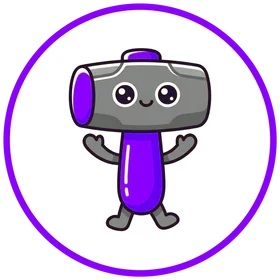
An energetic, anthropomorphic sledgehammer
Legend has it there was a time when every API was born buried under layers, scaffolding, and configuration files, and no one could see what it actually did anymore.
Then came Martim, a sledgehammer of steel, soul, and no patience. One swing was enough for the excess to collapse, leaving only the essentials standing. And don't be fooled by that little grin: beneath it lies pure steel.


Not meant to replace every backend stack
Marreta Lang isn't meant to be a general-purpose language. Its purpose is narrower: make the common case of building REST APIs simpler, cleaner, and more efficient for real services.
Need a highly customized architecture or low-level control? Another stack may fit better. Is it about exposing endpoints, validating contracts, applying rules, and integrating with common infrastructure? That's exactly the space.
Research project, real results
Born at TM Dev Lab. After several rounds of experiments, all three hypotheses were validated.
Active development · v0.2.0
The language and runtime are evolving, and the public surface isn't frozen yet. Focused on the first public release.
Open source · MIT
Free to use and contribute. Contributions via fork-and-PR.